

Evaluating Singapore’s role in your Asia Pacific strategy.
The Asia Pacific (APAC) region has become the largest global market for direct selling, reflecting a steady shift in both consumer demand and distributor growth. According to the World Federation of Direct Selling Associations’ (WFDSA) 2024 Global Sales Report, APAC accounted for 40.3 percent of global retail sales, surpassing the Americas at 37.3 percent.
The region also represents half of the world’s top ten direct selling markets, with continued year-over-year gains in countries such as China and Malaysia. From 2021 to 2024, APAC was the only region to record positive compounded annual growth in distributor participation—driven in part by a growing middle class and strong interest in entrepreneurial income opportunities.
Combined with high demand for health and wellness products and a long-standing cultural familiarity with relationship-based selling, APAC continues to draw attention from companies evaluating new or expanded regional strategies.
Singapore: Strategic Gateway to Asia Pacific
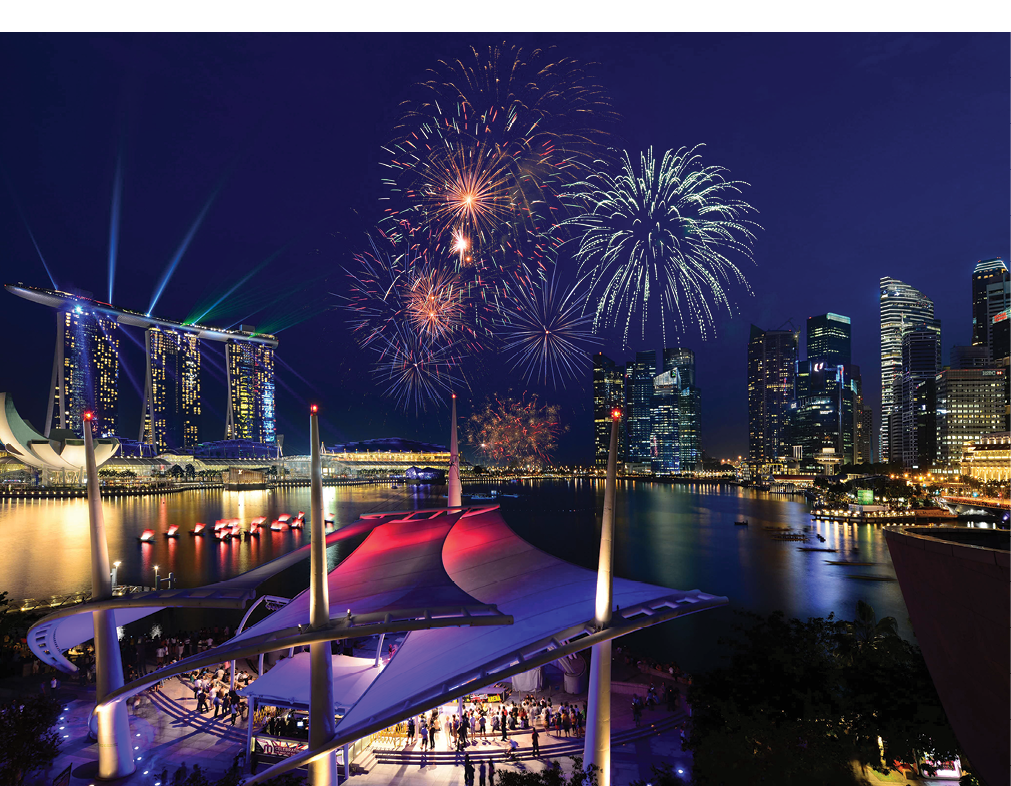
Within this broader APAC landscape, Singapore is often evaluated as a preferred regional base due to its geographic location, regulatory clarity and business infrastructure.
Singapore consistently ranks high in global competitiveness indices, including IMD’s World Competitiveness Ranking, reflecting strengths in economic performance, business efficiency and governance. These characteristics have made the city-state a popular choice for multinational companies establishing Asia Pacific headquarters across multiple industries, including direct selling.
Direct selling is permitted and regulated in Singapore, with a legal framework designed to distinguish legitimate business models from prohibited pyramid schemes. This clarity can reduce uncertainty for companies seeking a stable regulatory environment while operating across multiple APAC jurisdictions with varying legal standards.
In practice, some organizations are using Singapore as a coordination point rather than a primary growth market—housing regional leadership teams, operational functions or innovation initiatives while executing market-specific strategies elsewhere in Asia.
APAC’s Regional Test Environment
Singapore’s connectivity to other APAC markets has positioned it as a preferred testing ground for regional initiatives, including product pilots, leadership programs and operational frameworks. Its transportation links and proximity to Southeast Asia, Greater China and Australia allow companies to convene teams from multiple markets with relative ease.
Several global direct selling organizations—including Amway, Herbalife, PM-International, Nu Skin, USANA, Young Living and Unicity—have established regional offices in Singapore, citing access to talent, infrastructure and administrative efficiency as factors in those decisions.
These headquarters typically support strategy, training, supply chain coordination or digital initiatives serving wider APAC markets rather than focusing solely on domestic sales within Singapore.

Top Leadership Meeting and Incentive Destination
Situated in the heart of APAC and home to the award-winning Changi Airport, Singapore offers excellent air connectivity to over 170 cities in 50 countries and territories worldwide. Companies organizing their regional or global meetings or incentives—no matter the scale—can easily convene participants from across the world.
From an operational standpoint, Singapore offers a diverse range of venues capable of hosting leadership meetings, recognition events and training sessions, along with reliable transportation and hospitality infrastructure.
Singapore also offers unconventional venues to create unique, one-of-a-kind experiences. From heritage spaces such as the iconic National Gallery Singapore, closed street parties in Chinatown to networking receptions onboard the Royal Albatross, Asia’s only luxury tall ship, Singapore offers endless possibilities for events that aim to connect, inspire and make an impact.
For companies exploring APAC expansion, incentive trips or leadership meetings in Singapore can also serve as reconnaissance opportunities—allowing executives and field leaders to gain firsthand exposure to the region’s business environment, regulatory norms and operational considerations.

Examples from the Field
Several direct selling organizations have held regional or international events in Singapore in recent years. Nu Skin Korea hosted a Success Trip in 2024 for more than 500 leaders, incorporating business sessions alongside cultural activities.
Herbalife selected Singapore for its Future President Team Retreat in 2022, where 1,700 distributors from over 14 markets came together and will do so again. The success of the event gave Herbalife confidence to hold their bigger flagship event, Herbalife APAC Extravaganza, in Singapore twice, first in 2023 for over 20,000 people and later this year with close to 25,000 people.
These examples illustrate how companies have used Singapore as a convening location, integrating business development activities with recognition and networking.
A Practical APAC Consideration
Singapore is not the only pathway into Asia Pacific, nor is it a universal solution for every company’s expansion strategy. Growth across APAC remains highly market specific, shaped by local culture, regulation, consumer behavior and economic conditions.
However, for companies seeking a centralized base for regional coordination—or a neutral meeting ground for leadership teams spanning multiple countries—Singapore remains an intriguing option with its unmatched connectivity, global business hub reputation, highly skilled workforce and opportunity for execution across diverse APAC markets.
As direct selling companies continue to assess where and how to invest in Asia Pacific, Singapore represents one of several established platforms from which regional strategies can be developed, tested and refined.
From the March/April 2026 issue of Direct Selling News magazine.
The post Direct Selling’s APAC Opportunity first appeared on Direct Selling News.